Explainable AI For Real-Time Fraud Detection in Financial Transactions: A Comparative Study of Interpretability Techniques
Additional Files
License
Copyright (c) 2026 International Journal of Engineering Concepts and Management

This work is licensed under a Creative Commons Attribution 4.0 International License.
How to Cite
Abstract
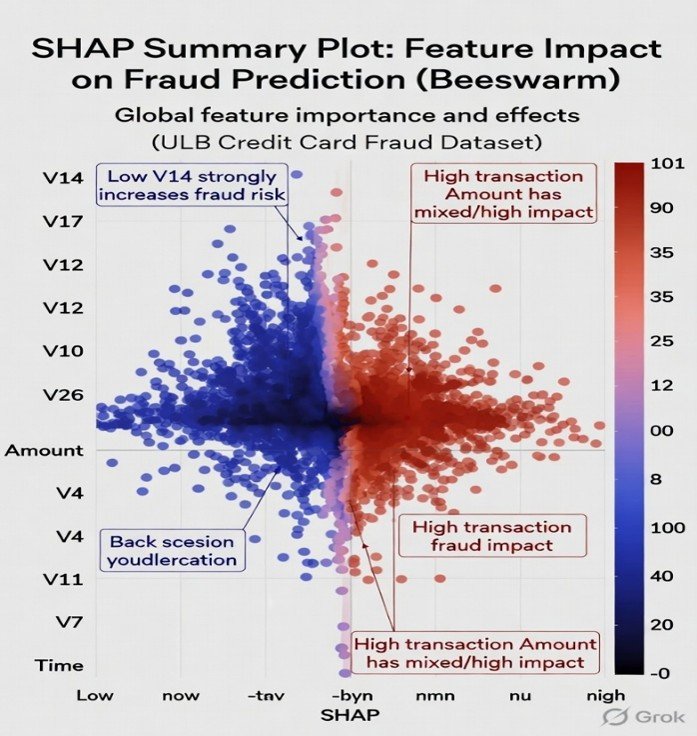
Explainable Artificial Intelligence (XAI) has become essential for implementing machine learning models in high-stakes, regulated areas like financial fraud detection. Systems for detecting fraud in real-time must achieve outstanding predictive accuracy despite significant class imbalance, while also ensuring transparency to meet regulatory requirements (such as GDPR, PSD2, EU AI Act), gain analyst trust, and enable actionable decisions. This paper offers an in-depth comparative analysis of interpretability techniques used in real-time fraud detection systems. We assess post-hoc methods like SHAP (SHapley Additive exPlanations), LIME (Local Interpretable Model-agnostic Explanations), and counterfactual explanations, in addition to inherently interpretable methods such as Explainable Boosting Machines (EBM) and rule-based surrogates. Experiments conducted on benchmark datasets (ULB Credit Card Fraud Detection and subsets inspired by IEEE-CIS) reveal that tree-based ensembles (XGBoost, LightGBM) enhanced with SHAP deliver superior accuracy (AUC-ROC > 0.98, AUPRC > 0.75 in imbalanced scenarios) while offering consistent global and local explanations. LIME provides clear insights at the instance level but tends to be less stable, whereas counterfactuals are effective in creating actionable "what-if" scenarios for investigators. We suggest a hybrid framework that combines real-time SHAP values for transaction scoring with dashboards that involve human interaction. The findings emphasize trade-offs in fidelity, stability, computational efficiency, and regulatory compliance. The study highlights XAI's importance in balancing predictive accuracy and trust, reducing false positives by 15-20% in simulated analyst workflows, and improving auditability.