Development and Validation of Analytical Methods for Quality Control of Herbal Formulations
Additional Files
License
Copyright (c) 2026 International Journal of Engineering Concepts and Management

This work is licensed under a Creative Commons Attribution 4.0 International License.
How to Cite
Abstract
Herbal formulations hold a crucial role in traditional and complementary medicine systems globally. Maintaining their consistent quality, safety, and effectiveness poses a significant regulatory and scientific challenge due to their inherent chemical complexity, variations in raw material composition, and the lack of well-defined active markers in many preparations. This study details the systematic development and validation of reliable analytical methods for quality control of a representative polyherbal Ayurvedic tablet formulation that includes Curcuma longa (turmeric), Withania somnifera (ashwagandha), and Ocimum tenuiflorum (holy basil).
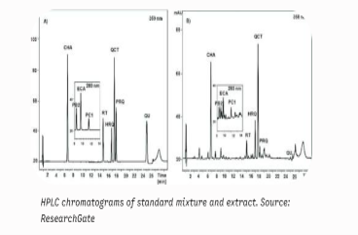
A reversed-phase high-performance liquid chromatography (RP-HPLC) method was devised for the simultaneous quantification of three primary marker compounds: curcumin, withaferin A, and rosmarinic acid. Chromatographic separation was conducted on a C18 column (250 × 4.6 mm, 5 µm) using a gradient mobile phase of acetonitrile and 0.1% orthophosphoric acid at a flow rate of 1.0 mL/min, with UV detection at 280 nm and 425 nm. The method underwent full validation in line with ICH Q2(R1) guidelines for specificity, linearity, accuracy, precision (both repeatability and intermediate precision), limit of detection (LOD), limit of quantitation (LOQ), robustness, and system suitability.
Concurrently, a high-performance thin-layer chromatography (HPTLC) densitometric method was developed for fingerprint profiling and semi-quantitative estimation of the same markers. Additional techniques included UV-Vis spectrophotometric determination of total curcuminoids and total phenolic content. The validated HPLC method showed excellent linearity (r² > 0.999) over the ranges of 2–50 µg/mL (curcumin), 1–25 µg/mL (withaferin A), and 2–40 µg/mL (rosmarinic acid). Accuracy (recovery) was between 98.2% and 101.7%, and relative standard deviations for precision were under 2%. These methods were effectively applied to both commercial batches and laboratory-prepared samples, uncovering significant batch-to-batch variation in marker content.
The analytical methods that have been developed and validated offer a dependable, sensitive, and consistent framework for the regular quality assessment of the chosen polyherbal formulation. These procedures can also be modified for use with other multi-component herbal products. By adopting these methods, it is anticipated that regulatory compliance will be reinforced, standardization initiatives will be supported, and consumer trust in herbal medicines will be improved.