Consumer Behavior Analysis in the Post-Pandemic Digital Marketplace: A Cross-Sectoral Study
Additional Files
License
Copyright (c) 2026 International Journal of Engineering Concepts and Management

This work is licensed under a Creative Commons Attribution 4.0 International License.
How to Cite
Abstract
The COVID-19 pandemic has significantly transformed consumer habits, hastening the transition to digital marketplaces and altering interactions within retail sectors. This research offers an extensive cross-sectoral examination of consumer behavior in the digital marketplace following the pandemic, concentrating on crucial sectors such as fashion, grocery, electronics, and entertainment. Utilizing a mixed-methods approach, the study includes a primary survey of 1,250 participants from varied demographic backgrounds in major economies like the United States, India, the United Kingdom, and China, complemented by secondary data from industry reports.
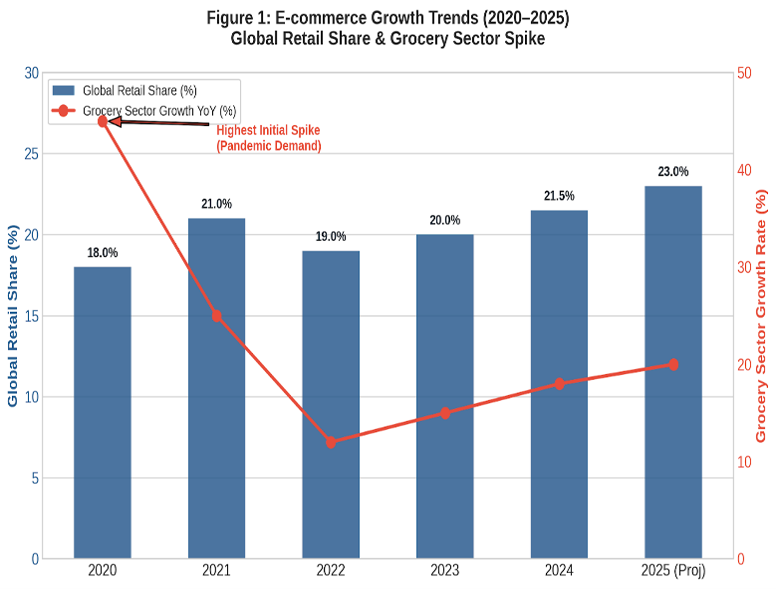
It investigates changes in purchasing behaviors, preferences for omnichannel experiences, awareness of sustainability, demands for personalization, and trust in digital platforms. The findings indicate a continued rise in e-commerce penetration, with online sales expected to represent around 22-24% of global retail by 2025, although variations exist across sectors. Grocery and essentials demonstrated the most robust hybrid adoption, whereas fashion and electronics focused on experiential and personalized digital interactions. Key drivers identified include health and safety concerns, economic uncertainty, and technological familiarity. Structural equation modeling (SEM) validated significant links between socio-economic factors, lifestyle changes, and purchasing adaptations.
The study underscores the ongoing trend of "conscious consumerism," with a heightened focus on sustainability, local sourcing, and ethical practices. It also addresses challenges like digital fatigue, privacy issues, and the digital divide. For businesses, the implications involve strategies for seamless omnichannel integration, AI-driven personalization, and sustainable supply chains. This research adds to the evolving literature by providing actionable insights for stakeholders navigating the post-pandemic digital economy, predicting continued but moderated e-commerce growth amid hybrid shopping norms.